
The Future of Education Isn’t Being Built in Isolation – It’s Being Designed Together
 April 28, 2026
 EdInnovate, Educational Conference, International Conference
There is a quiet shift happening in education.
Not in headlines.
Not in policy announcements.
But in the way learning itself is being imagined.
- Classrooms are no longer confined to physical spaces.
- Curriculum is no longer static.
- And the people shaping education are no longer just educators.
Today, the future of education is being influenced by technologists, researchers, designers, policymakers – each bringing a different lens to the same question:
How do we prepare learners for a world that is changing faster than education systems can keep up?
From Innovation to Alignment
The last decade has introduced powerful tools into education – AI-driven platforms, immersive learning environments, intelligent content systems.
But the presence of technology has not automatically translated into better outcomes.
Because the real challenge isn’t access to innovation.
It’s alignment.
- Aligning technology with pedagogy
- Aligning research with real-world application
- Aligning ideas across disciplines that rarely intersect
Without that alignment, innovation remains fragmented – impressive, but incomplete.
Where Conversations Begin to Converge
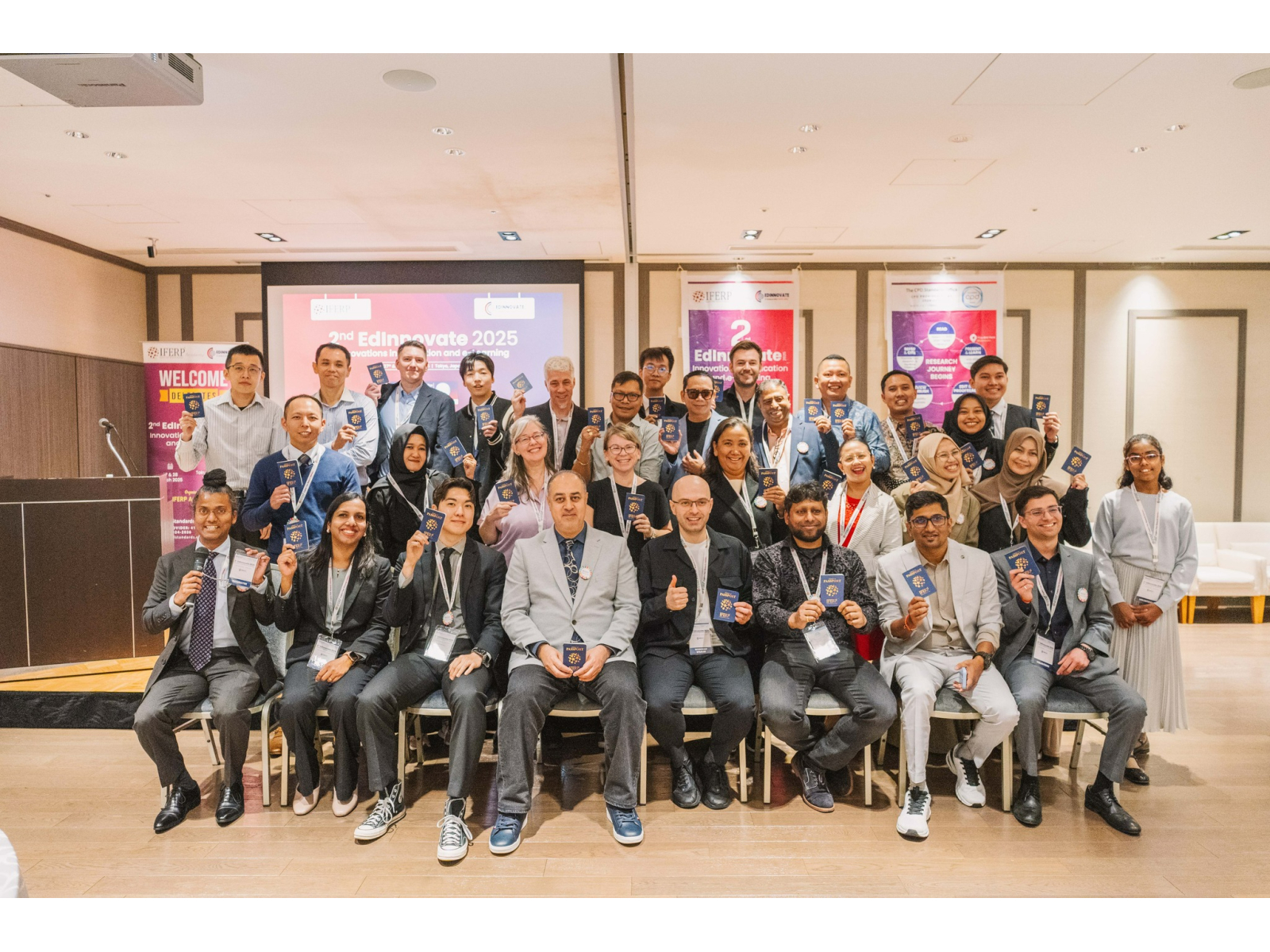
This is where conferences like EdInnovate 2026, hosted by IFERP in Tokyo, begin to play a more intentional role.
Framed around education technology and e-learning, the conference brings together a mix of voices that don’t always share the same space:
- Academicians and researchers
- EdTech practitioners and innovators
- Educators, policymakers, and industry professionals
The goal is not just to present ideas – but to place them in conversation with each other.
Because meaningful change in education rarely comes from a single breakthrough.
It comes from multiple perspectives meeting at the right moment.
Designing the Future, Not Just Discussing It
What makes gatherings like EdInnovate relevant is not scale – it is intent.
The focus extends beyond showcasing advancements to exploring:
- How emerging technologies can be meaningfully integrated into learning environments
- How digital tools influence engagement, accessibility, and outcomes
- How research can inform decisions that shape education systems
Themes such as artificial intelligence in education, digital learning ecosystems, and immersive technologies are not treated as isolated topics – but as parts of a larger, evolving narrative.
Because the future of education will not be defined by individual innovations,
but by how those innovations work together.
Tokyo: A Setting That Reflects the Conversation
Choosing Tokyo as the host city is more than a logistical decision.
It represents a context where technology, research, and real-world application intersect seamlessly. A place where innovation is not theoretical – it is lived, tested, and scaled.
Bringing a global education technology conversation into this environment reinforces a simple idea:
The future of learning must be globally informed, but locally adaptable.
Rethinking Roles in a Changing Education Landscape
As education evolves, so do the roles within it.
- Educators are navigating new ways of engaging learners.
- Researchers are exploring how technology reshapes knowledge creation.
- Industry professionals are influencing how skills translate into real-world relevance.
No single group owns the future of education anymore.
It is being shaped collectively – and that requires spaces where these roles can intersect, challenge, and build on each other.
From Possibility to Practice
One of the most critical transitions in education today is moving from what is possible to what is practical.
Technology can enable new forms of learning – but only when it is:
Thoughtfully implemented
Contextually relevant
Accessible at scale
This is where deeper collaboration becomes essential.
Not just to generate ideas – but to test, refine, and apply them in ways that create lasting impact.
What Comes Next
The future of education will not be shaped by technology alone.
It will be shaped by how effectively:
Ideas are shared across disciplines
Innovations are translated into real learning experiences
Global perspectives are brought into local contexts
Conferences like EdInnovate 2026 signal a shift in that direction – from isolated progress to connected evolution.
Because education, at its core, has always been about preparing people for what comes next.
And today, preparing for what’s next requires something different:
Not just better tools.
But better conversations.
News about the 3rd EdInnovate in Tokyo, Japan: https://aninews.in/news/business/iferps-edinnovate-2026-to-bring-scholars-and-practitioners-together-to-shape-the-future-of-education-technology20260227184235/
Editing & Proofreading Services
Build Your Academic CV with IFERP AI Resume Builder
Scopus Indexed Conferences 2026
-
9th International Conference on Multidisciplinary and Current Educational Research (ICMCER)

-
9th International Conference on Recent Trends in Multi-Disciplinary Research (ICRTMDR)
-
50th World Conference on Applied Science, Engineering & Technology (WCASET)
-
9th International Conference on Dentistry and Oral Health (ICDOH-2026)
News
- Siddth Jain and Rudra’s IFERP is Empowering a Global Research Community
- From Idea to Funding: IFERP's Guide to Successful Grant Applications
- Protecting Researchers: IFERP’s Guide To Identifying And Avoiding Hijacked Journals
- The Power of Networking: How IFERP memberships open doors to global opportunities for universities
- IFERP bridges academia and industry for global sustainability
- Ballot Education Project takes center stage: Bridging theory and practice at International Conference
- IFERP Spearheads Global Sustainable Development Through Research & Innovation