
The End of Single-Discipline Thinking: Why the Future of Research Will Be Built at Platforms Like ICMCER 2026
 April 24, 2026
 ICMCER, International Conference, Research Paper
A few years ago, a researcher working on climate change might never have collaborated with someone in artificial intelligence. An education expert may never have meaningfully interacted with a healthcare innovator. Each operated within well-defined boundaries – publishing, presenting, and progressing within their own domains.
That world no longer exists.
Today’s most urgent challenges don’t belong to a single discipline. They sit at the intersection of many – climate and technology, education and data science, healthcare and policy. And yet, the platforms designed to bring researchers together have largely failed to evolve at the same pace.
Most conferences still operate like they did a decade ago: segmented tracks, isolated conversations, and limited continuity beyond the event itself.
This is precisely the gap that ICMCER 2026 (International Conference on Multidisciplinary and Current Educational Research) is attempting to close.
From Conferences to Convergence
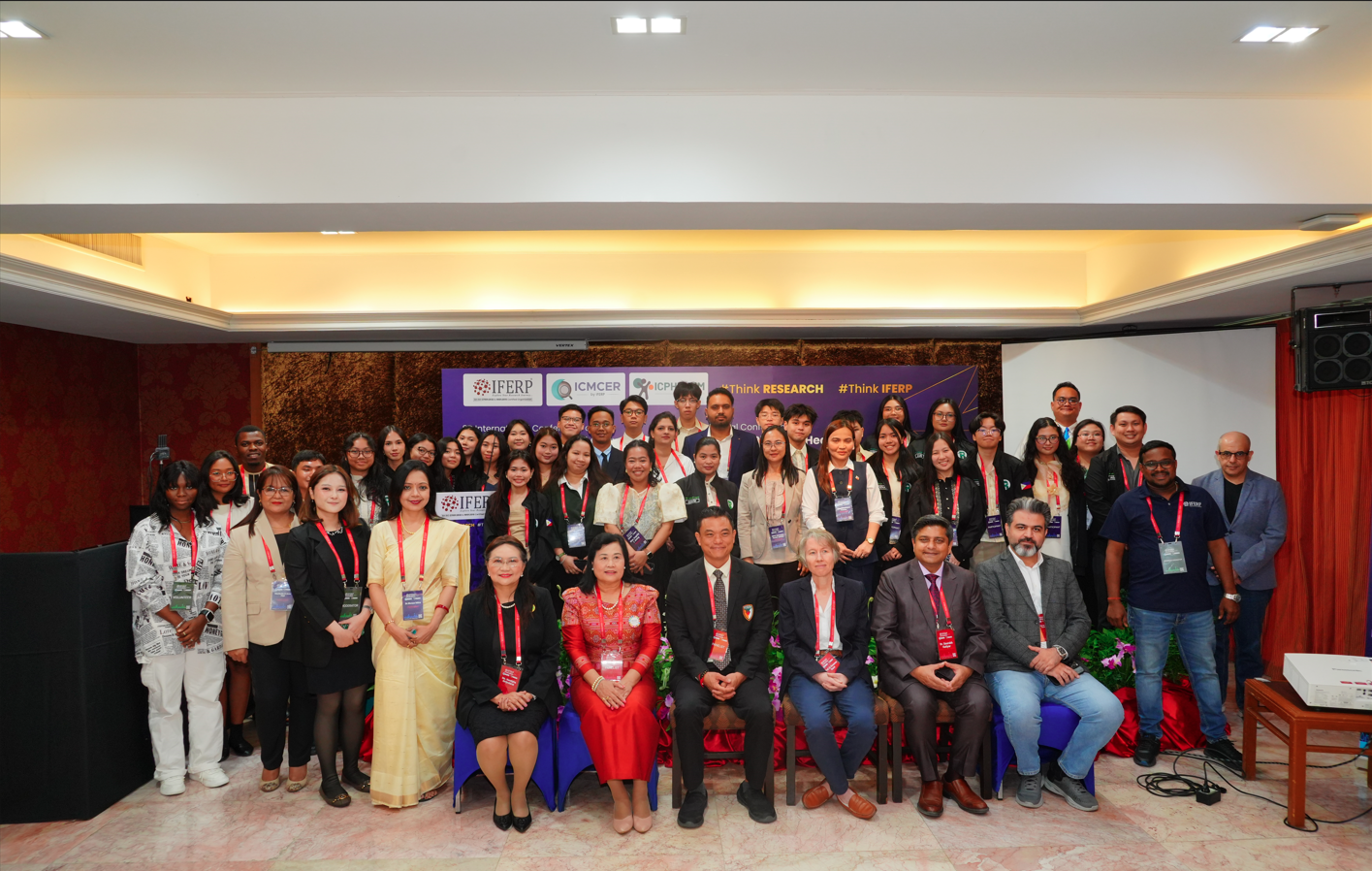
When IFERP announced the 8th edition of ICMCER in Bangkok, it wasn’t positioned merely as another global academic gathering. The intent was far more deliberate – to create a space where disciplines don’t just coexist, but actively collide.
Because that’s where the real work begins.
At ICMCER, a researcher in educational technology isn’t just presenting findings; they are exposed to perspectives from sustainability experts, data scientists, and policy thinkers.
These interactions are not incidental – they are engineered.
The shift is subtle, but important:
From presentation → participation
From knowledge sharing → knowledge synthesis
Why This Matters Now More Than Ever
There is a growing disconnect in academia.
On one hand, research is becoming increasingly complex and interconnected. On the other, many researchers still struggle with:
- Limited visibility beyond their niche
- Fragmented collaboration opportunities
- Unclear pathways from research to real-world impact
The result? Valuable work often remains underutilized – published, but not amplified; presented, but not extended.
ICMCER 2026 enters this landscape with a different premise:
What if a conference could actively accelerate the lifecycle of research – not just showcase it?
Designing for the Research Journey, Not Just the Event
What stands out about ICMCER is its recognition that researchers don’t operate in moments – they operate in journeys.
From early-stage idea development to publication and collaboration, each stage requires different forms of support, exposure, and feedback.
ICMCER addresses this by:
- Creating structured opportunities for interdisciplinary exchange
- Encouraging dialogue that refines, not just validates, research
- Connecting participants with a broader academic and professional network
It’s not just about being heard.
It’s about being challenged, expanded, and carried forward.
Bangkok: More Than a Location
The choice of Bangkok is not incidental.
As Southeast Asia continues to emerge as a hub for academic and professional exchange, the city represents a convergence point in itself – geographically, culturally, and intellectually.
Hosting ICMCER here signals a shift away from traditional, predictable conference circuits toward more globally inclusive platforms. It opens the door for participation from regions that are increasingly shaping the future of research, but are often underrepresented in global conversations.
A Different Kind of Academic Platform
There is a tendency to evaluate conferences by scale – number of attendees, number of papers, number of sessions.
But scale is no longer the differentiator.
Relevance is. Connection is. Continuity is.
ICMCER 2026 reflects an evolving philosophy:
- That research should not remain confined to disciplines
- That collaboration should not end with the event
- That platforms must actively contribute to the progression of ideas
In that sense, it is less of a conference and more of a convergence layer for global research communities.
Looking Ahead: Where This Leads
If the past decade of academic events was about dissemination, the next will be about integration.
Platforms like ICMCER are early indicators of that shift – moving away from static formats toward dynamic, interconnected ecosystems.
For researchers, this represents a fundamental change:
Not just in where they present, but in how their work evolves once it’s presented.
And that may ultimately be the difference between research that is seen – and research that actually shapes the future.
News about 8th edition of ICMCER in Bangkok: https://aninews.in/news/business/iferp-announces-8th-icmcer-2026-in-bangkok-set-to-unite-global-thought-leaders-to-empower-future-generations-through-multidisciplinary-education20260202160355/
Editing & Proofreading Services
Build Your Academic CV with IFERP AI Resume Builder
Scopus Indexed Conferences 2026
-
9th International Conference on Multidisciplinary and Current Educational Research (ICMCER)

-
9th International Conference on Recent Trends in Multi-Disciplinary Research (ICRTMDR)
-
50th World Conference on Applied Science, Engineering & Technology (WCASET)
-
9th International Conference on Dentistry and Oral Health (ICDOH-2026)
News
- Siddth Jain and Rudra’s IFERP is Empowering a Global Research Community
- From Idea to Funding: IFERP's Guide to Successful Grant Applications
- Protecting Researchers: IFERP’s Guide To Identifying And Avoiding Hijacked Journals
- The Power of Networking: How IFERP memberships open doors to global opportunities for universities
- IFERP bridges academia and industry for global sustainability
- Ballot Education Project takes center stage: Bridging theory and practice at International Conference
- IFERP Spearheads Global Sustainable Development Through Research & Innovation