
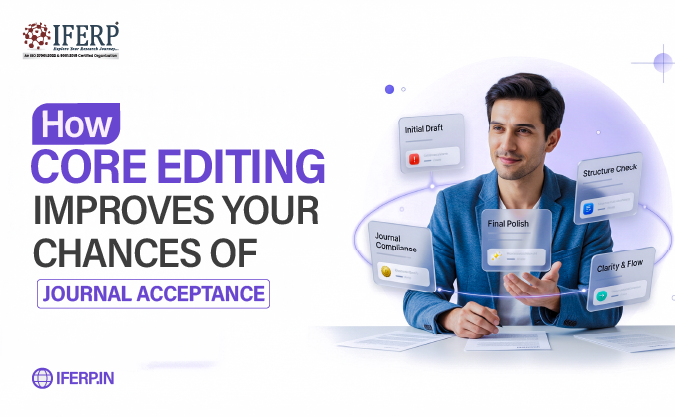
How Core Editing Improves Your Chances of Journal Acceptance
 June 17, 2026
 core editing services, editing and proofreading, editing services, Journal Publication
Core editing services help improve language equality, grammar issues, structure, formatting, and overall consistency of your manuscript. A well-edited and well-presented manuscript creates a strong first impression, improves reviewer understanding, and helps publish your research paper in a top journal.
In a competitive world, the way you present your research is as important as the study and data collection to write a paper. With high rejection rates by prestigious journals, editors, and peer reviewers expect original, well-structured, and impeccable presentation. Any issue with language quality, grammar, consistency, journal guidelines, images, tables, etc. can result in rejection of your paper, which can be very frustrating and time-consuming.
This is where core editing comes in handy. In this article, we will help you understand how manuscript editing services improve your chances of journal acceptance.
What Is Core Editing?
Core editing is a professional editing service that improves the language, structure, and overall quality of your manuscript while maintaining the author’s original meaning and scientific content. It is a great option for researchers, academics, and scholars who are preparing papers for submission to top journals.
It is way more than simple proofreading, which only focuses on spelling errors, grammar mistakes, punctuation errors, and small unintentional errors. Core editing services closely examine the language and clarity of writing to ensure that it has been conveyed in a concise and efficient manner.
Here are key aspects of core editing that every researcher should know:
-
Language improvement
-
Grammar and syntax correction
-
Sentence structure enhancement
-
Clarity and readability improvement
-
Consistency checks
Why Journal Manuscripts Get Rejected
For researchers, academicians, scholars, PhD holders, and students, publishing a research paper in a reputable publication is a great achievement. But, unfortunately, many times, your manuscripts get rejected before they are even published. Here are some reasons for it:
Poor Language Quality
If reviewers and editors face difficulty in understanding your manuscripts that are not clearly written, are inadequately phrased, or are poorly worded, they simply reject them. Even solid research gets ignored during the peer review process when you have not successfully conveyed the objectives, methods, and findings of your work in a paper.
Unclear Research Presentation
In your manuscript, you must show how the research is tied to a coherent and deep study concept. When the purpose, methodology, results or conclusions of your study are unclear or poorly presented, the reviewer is unable to evaluate them. In such cases, you face rejection when publishing a paper.
Grammatical Errors
Mistakes in grammar, spelling, punctuation, and syntax may diminish the formality and authority of your paper. Errors in these areas can also distract reviewers and lead to misunderstandings of the intended message.
Inconsistent Terminology
A lack of consistency in terminology can result in rejection. For instance, you use different terms, abbreviations, or definitions for the same idea within a paper, which creates confusion for readers and reduces the overall quality of your paper. So, consistency is crucial for maintaining clarity and correctness.
Weak Manuscript Structure
No matter how good your research quality is, your manuscript will get rejected if the structure and presentation are not good. The structure of the manuscript needs to be clear, eye-catching, and impressive. You need to focus on everything placing of images, tables, line spacing, font size, etc.
Failure to Follow Journal Guidelines
There are specific formatting and submission requirements for each journal. By not following them, your paper will get rejected. Common guideline mistakes that researchers often make are:
- Incorrect citation style
- Improper formatting
- Missing declarations or ethical statements
- Exceeding word limits
- Incorrect figure or table formatting
- Submitting to an unrelated journal
How Core Editing Improves Journal Acceptance Chances
Here are some ways on how academic editing services improve journal acceptance chances:
Enhances Clarity and Readability
You need to understand that clear, simple, and well-organized submissions are given priority by high-impact publications. Expert core editors make sure your research is presented in a way that improves logical flow and readability.
To strengthen your arguments, improve sentence structure, cut out repetition, and make difficult concepts more understandable. They provide correction of grammatical, punctuation, spelling, and syntactical errors that could distract the reader/reviewers from your findings.
Eliminates Language Errors
Grammar, syntax, and stylistic consistency are challenges for many scholars, researchers, and PhD students, especially for those whose English is not a native language. Even small mistakes might lead to misunderstandings and damage your work’s trustworthiness.
But, expert journal manuscript editing services, carefully fix grammatical errors, enhance word choice, and ensure compliance with journal-specific formatting and style requirements (such as APA, MLA, or Chicago).
Improves Academic Writing Style
Academic journals expect manuscripts to follow a formal, objective, and discipline-specific writing style. Core editing refines informal expressions, overly complex wording, redundant phrases, and inconsistent tone to ensure your manuscript aligns with scholarly communication standards. It also helps improve precision and conciseness, allowing you to present complex research findings in a way that is both professional and easy to understand.
Strengthens Manuscript Consistency
A manuscript that contains inconsistent terminology, abbreviations, units of measurement, citation styles, or formats may be perceived to be unrefined. Core editing editors check all sections of your manuscript, from the abstract to your reference section, provides for a well-structured manuscript, which is more readable for reviewers. This also decreases the possibility that a reviewer will be confused by your language or structure and enhances the overall quality of your manuscript.
Helps Meet Journal Standards
Many times, your manuscripts get turned down before peer review because they are not written as per the journal’s guidelines for editorial style or language. By improving the structure, organization, clarity, and overall look of your manuscript, core editing helps ensure compliance with journal publication standards. In addition, it helps to ensure that your abstract, introduction, methods, results, and discussion are all effective at communicating information.
Improves Reviewer Experience
Peer reviewers frequently review several submissions within a limited time. A well-edited manuscript aids peer reviewers by providing a clear, organized, and easily readable presentation of the manuscript.
Therefore, because peer reviewers do not have to spend time interpreting unclear language or correcting inconsistencies, they can devote more attention to evaluating the quality, originality, and impact of your research. This results in more constructive feedback and a more efficient review process at upcoming international conferences 2026.
Reduces Avoidable Revisions
When you take the help of journal manuscript editing, they ensure that you don’t waste much time on revisions by improving your paper for language, grammar, consistency, flow, readability, structure, and other important factors. Fewer revisions mean quicker publishing, which saves you valuable time.
Core Editing vs Proofreading vs Substantive Editing
Proofreading, core editing and substantive editing are some of the main terms that research editors frequently use interchangeably. However, they refer to different phases of preparing a manuscript for publication. The research paper editing that you choose should be based on your subject, editing needs, and journal publishing.
| Feature | Proofreading | Core Editing | Substantive Editing |
| Grammar Corrections | Yes | Yes | Yes |
| Language Improvement | Limited | Extensive | Extensive |
| Structural Changes | No | Minor | Major |
| Readability Enhancement | Limited | High | High |
| Consistency Checks | Basic | Comprehensive | Comprehensive |
| Academic Style Refinement | Minimal | Extensive | Extensive |
| Best Stage of Use | Final draft | Pre-submission draft | Early or developing draft |
When Should You Choose Proofreading?
Proofreading is the final quality check before submission or publication. It focuses on correcting minor spelling mistakes, punctuation errors, formatting inconsistencies, and typographical issues.
So, if your manuscript is already well-written, logically structured, and journal-ready, proofreading may be sufficient. However, it does not improve sentence clarity, writing style, or the overall readability of your research.
When Should You Choose Core Editing?
Writers/researchers/scholars who are preparing their manuscripts for submission to journals should select core editing as it does much more than just proofreading. It enhances the grammar, structure by improving grammar, structure), choice of words, academic tone (by improving academic tone) and overall readability.
Core scientific editing services will ensure that the use of terms, abbreviations, and styles are consistent throughout the entire manuscript. You can choose them when the presentation of the research has not been developed. This saves you time and makes your paper ready for review with minimal or no revisions for publishing.
Benefits of Core Editing for Non-Native English Researchers
- Improved Language Accuracy: The main aim of core editing is to address errors in grammar, spelling, punctuation, and sentence structure. They also improve word choice and clear sentences to ensure an accurate and professional presentation of your research.
- Better Reviewer Understanding: By improving the structure of writing, core editing makes it easier for reviewers to understand your work, including objectives, methods, results, and conclusions.
- Enhanced Research Presentation: By enhancing the readability, academic tone, and flow of your manuscript, core editing allows your research to be presented in a well-organized manner that improves overall research and paper quality.
- Increased Confidence During Submission: Choosing a journal submission editing increases your confidence that your work is acceptable in various journals for submission and publication. For more help you can check the journal submission guide to improve acceptance chances.
- Greater International Visibility: Core editors are experts in the English language, which improves your paper’s language to increase its visibility worldwide.
Common Mistakes Researchers Make Before Submission
An exciting phase in your academic career is publishing your research article in a top journal. However, a lot of researchers, especially first-time authors, make preventable errors when submitting their work, which can delay or prevent publishing.
Here are some common mistakes you should avoid before submission:
Relying Only on Spell Checkers
Even though spell checkers may catch simple errors at the spelling and grammar level, they are unable to detect contextual problems, awkward sentence construction, and words that aren’t used in accordance with discipline-based terminology. A computer-generated edit may appear to be a clean manuscript, but there can still be issues with the way a document is written.
Skipping Professional Editing
Language quality can affect decision-making about your articles, as many researchers believe that strong research alone is enough for publication. However, articles that are poorly written will often be difficult for editors and reviewers to read and therefore lead to rejections. Thus, professional publication support services are must as they provide greater clarity, consistency and overall presentation to an article.
Ignoring Journal Guidelines
Each journal has different requirements for paper formatting, paper structure, reference style, word limit, figures, and a declaration of compliance with ethical standards. If you submit your work that is not in accordance with the journal’s specified guidelines, your paper may be rejected without being sent out for peer review (i.e., desk rejection).
Using Inconsistent Terminology
Readers and reviewers may be left perplexed and unsure of an author’s intent if they encounter inconsistent nomenclature. The use of inconsistent terms, abbreviations, or definitions for the same concept can become ambiguous and disrupt the document’s clarity. The use of consistent terminology throughout a manuscript will improve the accessibility of the document and facilitate accurate communication of research results.
Submitting Without Peer Review
When you submit a paper without peer review, it misses needed revisions, and you face rejection or delay in publishing it. So, always submit your manuscript for peer review before final submissions for journal publication.
How to Choose a Reliable Core Editing Service
Here is how to choose a reliable core editing service:
- Subject Matter Expertise: Look for core editors who are experts in your subject or research. This is because they will have complete knowledge of the structure, topics, and terminology used in your research.
- Experienced Academic Editors: Always choose experienced editors over fresher who offer low-budget editing service. Experienced core editing can improve your chances of publishing a paper in a top journal.
- Quality Assurance Process: Ask for the process for the services you choose. And understand what parameters they follow to improve the quality of your paper and what assurance they give for the same.
- Confidentiality Measures: Make sure the core editing you choose maintains full confidentiality for your work and personal information.
- Journal Editing Experience: Go to services that have experience in editing manuscripts for specific journals like Scopus journal publication.
- Transparent Pricing: Never opt for core editing that is not transparent for pricing, but is after manipulating you for their cheap services. Such editors often have hidden charges that they ask for after they edit the paper.
- Positive Client Feedback: Check client feedback on Google or other platforms. You can also ask past clients or fellow researchers about their experience with the service provider.
The Role of Core Editing in the Peer Review Process
Core editing can have a significant impact on getting your manuscript ready for peer review. This enhances clarity, ease of reading and presentation of the document. If your manuscript is professionally edited by an English editing for journals in advance of submission to a journal, it will leave editors and reviewers with a positive impression of your commitment to preparing a quality paper with true research results.
By refining grammar, sentence structure, academic tone, and logical flow, core editing also helps reviewers to understand the objectives, methods, results and conclusions of your study. In addition to increasing the overall readability of your manuscript, editing and proofreading services facilitates greater reviewer engagement.
Core editing also has an important effect on the number of critiques of the manuscript related to the document’s language. With professional writing, the reviewer directs their attention towards assessing the scientific quality, originality, and importance of the work as opposed to assessing it based on the language.
In simple words, the benefits of core editing can contribute to reducing the overall number of revisions due to language-related issues and increase the likelihood of a successful submission with few or no revisions.
Conclusion
Core research editing services are important for students, researchers, and scholars to write a manuscript that is ready for submission to a journal. This improves the language quality of your manuscript to make it clearer, more readable, consistent, and scholarly in style. When you submit a well-structured and formatted manuscript, the reviewers or editors focus more on your research and quality rather than simply rejecting the paper based on structure or presentation.
Therefore, you experience a more effective peer review process, fewer requests for revision and greater chances of getting published. Professional core editing offered by IFERP helps researchers present their work clearly, accurately, and professionally. It significantly improves the chances of positive reviewer feedback and successful journal publication.
FAQs
What is core editing in academic publishing?
Core editing is a form of professional editing that aims to make manuscripts readable by improving their language, clarity and consistency. Thus, academic translation services ensure that your paper meets publication standards.
How does core editing improve journal acceptance rates?
By enhancing the quality of your manuscript by correcting linguistic errors, improving readability and academic writing style, core editing allows reviewers to concentrate on your research rather than on language problems. This is how it improves the chances of your paper being accepted into a journal.
What is the difference between core editing and proofreading?
Proofreading consists of checking for and correcting small errors in spelling, grammar and punctuation. Core editing, on the other hand, provides assistance by improving sentence structure and clarity, creating a more appropriate academic tone, and making your work paper easier to read/understand as a whole.
Can core editing guarantee journal acceptance?
Core editing does not guarantee publication because many other factors influence whether an article will be published (e.g., quality of research, originality of research, validity of research methodology and/or suitability of research for the target journal). But, these services ensure your paper meets all requirements of the journal to increase your chances of publishing your paper in it.
How long does professional core editing take?
The time to complete the editing process depends on the length/complexity of the manuscript and the requirements for the editing task. However, most professional editors can edit manuscripts in approximately 1 to 3 weeks.
Is core editing useful for non-native English researchers?
Yes, core editing is very useful for non-native English researchers. It helps improve the language quality of your paper by checking and correcting it for grammatical errors, punctuation, structure, and other aspects of language.
How much do core editing services typically cost?
The cost of core editing services depends on manuscript length, topic, research work, journal selection, and time for publishing.
Editing & Proofreading Services
Build Your Academic CV with IFERP AI Resume Builder
Scopus Indexed Conferences 2026
-
9th International Conference on Multidisciplinary and Current Educational Research (ICMCER)

-
9th International Conference on Recent Trends in Multi-Disciplinary Research (ICRTMDR)
-
50th World Conference on Applied Science, Engineering & Technology (WCASET)
-
9th International Conference on Dentistry and Oral Health (ICDOH-2026)
News
- Siddth Jain and Rudra’s IFERP is Empowering a Global Research Community
- From Idea to Funding: IFERP's Guide to Successful Grant Applications
- Protecting Researchers: IFERP’s Guide To Identifying And Avoiding Hijacked Journals
- The Power of Networking: How IFERP memberships open doors to global opportunities for universities
- IFERP bridges academia and industry for global sustainability
- Ballot Education Project takes center stage: Bridging theory and practice at International Conference
- IFERP Spearheads Global Sustainable Development Through Research & Innovation