
How to Check Quartile of a Journal in Web of Science
 November 28, 2025
 Journal and Publication, q1 journals, q2 journals, q3 journals, q4 journals, Web of science journal
A Clear Guide for Understanding Journal Quartile Rankings
Journal quartiles – have you heard of this term before? In academic publishing, this is one term that most people are not aware of. It often creates confusion for especially new researchers who are targeting high-impact publications. Many times even those who are preparing for doctorate or applying for promotions or even simply trying to understand research metrics are not aware of the concept of quartile ranking. However it is a concept you cannot afford to ignore.
Journals today are evaluated not only by impact factor but also by their position in quartiles—Q1, Q2, Q3, and Q4. So it is very important to understand the concept clearly. These quartiles help determine the journal’s influence and also its overall quality. They also help you decide if a journal aligns with your academic goals. In this detailed guide, we will try to understand how quartile rankings work, how to interpret them, and how researchers can use them to make informed publication decisions.
We will also look at essential concepts like the Journal quartile ranking, the Journal quartile list, differences between the q1, q2, q3, q4 journal list web of science etc.
What Q1, Q2, Q3, and Q4 Really Mean
Let’s break down what q1, q2, q3, q4 actually represents.
Q1 Journals
- Top tier, globally recognized journals which are highly cited in many reputed publications overcoming all the stringent acceptance criteria.
- Usually it is ideal for PhD, postdoctoral scholars
Q2 Journals
- Strong academic value journals which carry a very good reputation along with a balanced level of competitiveness.
- It is well suited for mid-career researchers and scholars who have just started to build their credentials
Q3 Journals
- Journals with moderate citation levels which have easier acceptance due to flexible guidelines and formatting rules
- Helpful for early-stage researchers who need practice
Q4 Journals
- Journals which are most useful for beginners and are still indexed and credible
- Usually such journals have lower expectations for citation performance
The q1, q2, q3, q4 journal list web of science organizes this classification based on the Web of Science ranking system.
What Are Journal Quartile Rankings?
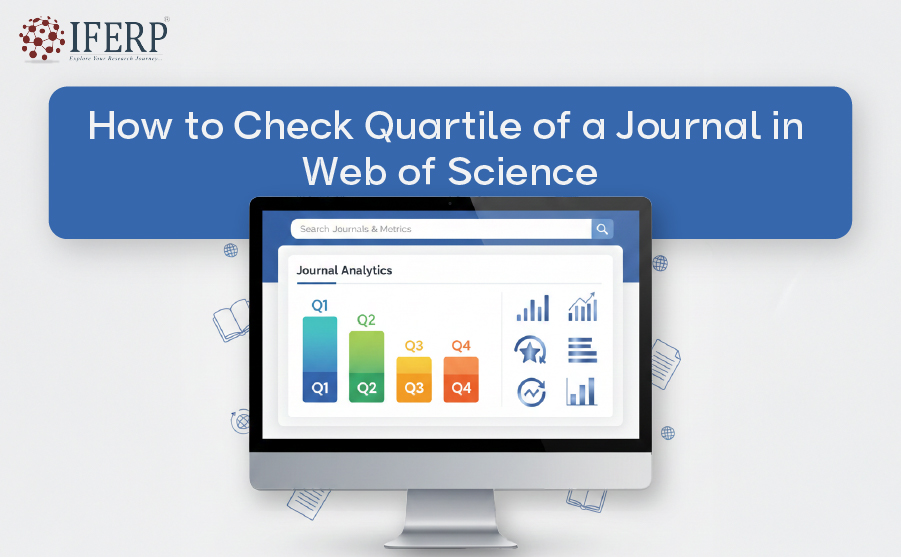
Journal quartiles is a universal ranking method used to classify journals based on their impact factor and citation performance. The journals are divided into four groups Q1, Q2, Q3 and Q4 within their subject area. The meaning of each is given below:
- Q1 journals are the top 25%
- Q2 journals are between 25–50%
- Q3 journals are between 50–75%
- Q4 journals are the bottom 25%
These quartiles help researchers quickly understand a journal’s influence in its field. To understand this better, the journals which are classified as Q1 are the ones which have the maximum influence and impact factor.
Imagine you’re searching for journals in biotechnology. Instead of comparing hundreds of journals manually, quartiles can help you narrow down the huge list into packages. It can immediately show which ones are leading in terms of citation reputation, peer-review strength, and scholarly impact as well.
Why Are Quartile Rankings Important?
Across the world, academic institutions prefer publications in high-quartile journals because they reflect strong research quality and high standards. Here’s why quartile rankings matter:
- Research credibility
Top quartiles (especially Q1 and Q2) show that the journal follows stricter peer-review processes and has high readership within the academic community.
- Academic Promotions and Funding
Many universities and funding agencies give preferences to publications in specific quartiles for granting promotions or research grants.
- Better Citation Opportunities
Research published in higher-quartile journals attracts more international attention and citations which significantly improves your academic profile. A portfolio filled with Q1 or Q2 publications demonstrates consistent quality.
- Reduced Risk of Predatory Journals
Quartile-listed journals are rarely predatory, making them a reliable choice for any publication. They come with authenticity and a strong display of high standards.
Having understood about quartiles, let us now understand how they are calculated.
How Are Quartiles Calculated?
Quartiles are derived using metrics such as:
- Citation impact and Journal Impact Factor (JIF)
- Category ranking within a subject which depends on the number of papers published
- Peer-review quality and Editorial reputation
These metrics are compiled, given a value and then evaluated annually by indexing bodies such as google scholar, Scopus or the Web of Science Core Collection. Here you might have a doubt, how can a research paper which deals with pathogens be compared with a paper which deals with data science.
So in order to ensure uniformity and equality, every journal is evaluated only within its subject category. For example, a Q1 medical journal might differ from a Q1 engineering journal in the Journal quartile ranking because the fields vary in citation volume and publishing behavior. With this you can gauge your next research journal quartile right?
What is the Journal Quartile List?
The Journal quartile list is essentially a database where journals are grouped according to their quartile rank. This list helps researchers quickly determine where a journal stands within its discipline. The ultimate purpose of this categorisation is to save time.
The list typically includes the following- Journal name; Subject category; ISSN; Indexing status; Impact factor; Name of the Publisher and his/her Country.
How Web of Science Determines Quartiles
Web of Science journal ranking is something which everyone looks out for. The Web of Science is one of the most respected indexing bodies in the world. Its quartile calculation involves many factors such as Subject-wise journal ranking, Impact Factor, Citation distribution, Editorial quality, Research influence etc to name a few.
The system is transparent and updated on a yearly basis. This frequent update ensures that the journals remain competitive and relevant to the present academic requirements.
Exploring Web of Science Journal Ranking
The Web of Science journal ranking 2026 is based on the Journal Citation Reports (JCR). Every year, this ranking is updated based on citation data collected across thousands of journals. Because of its reliability, researchers often consult this ranking more than anything else before shortlisting journals for submission. What are you thinking? About your next research journal indexing, don’t worry you are at the right place.
What’s New in the Web of Science Journal Ranking 2026?
The updated Web of science journal ranking 2026 will be bringing several important changes about which you will get to know only here:
- Many subject categories and sub topics have been added to diversify the content for expanded coverage of interdisciplinary journals.
- Cloned or predatory journal entries have mostly been removed after thorough checking.
- The Citation evaluation mechanism has been revised to make it more inclusive.
- New metrics for percentile and quartile calculation have been introduced.
This ensures journals are assessed more accurately and fairly across disciplines. Another objective is also to make them more accessible and affordable.
Understanding Web of Science Journal Ranking Quartile
The Web of Science journal ranking quartile as we know is a classification that shows where a journal stands within its subject category. The percentile determines the quartile:
- 75–100 percentile → Q1
- 50–74 percentile → Q2
- 25–49 percentile → Q3
- 0–24 percentile → Q4
Before submitting a manuscript, it is important that the researchers should always check this quartile to ensure alignment with their academic requirements. Researchers should understand how upcoming or newer journals will be classified in future cycles. Emerging journals that show strong citation patterns may rise in quartile levels over time since the Journal quartile check happens frequently. A newly indexed journal may not have a quartile ranking immediately—but its performance in initial years determines its future quartile classification which is not fixed as well know. Web of Science journal ranking quartile is critical for serious authors to know how to perform an accurate Journal quartile check before submitting a paper.
Conclusion
We have clearly understood that journal quartile ranking will allow a researcher to submit work strategically by avoiding low-credibility journals. It helps to build a strong academic portfolio. Quartiles are more than just numbers. They are aids that reflect the journal’s influence, review quality, citation reach, content strength and the qualitative contribution to the global research ecosystem.
If your career goal is in the field of research then choosing journals from higher quartiles—especially Q1 and Q2—can significantly strengthen your academic journey. Meanwhile, Q3 and Q4 journals provide the necessary scope for only beginners and early-career researchers.
So always remember, using quartile rankings wisely ensures your work is not just published, but published in a place where it will be respected, read, and acknowledged beyond boundaries.
FAQs
- What is a journal quartile ranking?
It is a system that classifies journals into four groups (Q1–Q4) based on their citation performance and impact factor in a subject area.
- How do I find the quartile of a journal?
Search for the journal’s ISSN in Web of Science or Journal Citation Reports to get its official quartile categorisation.
- Are Q1 journals the best choice for researchers?
Yes, Q1 journals have the highest reputation and citation impact, making them ideal for high-quality research submissions and publications.
- Do quartiles change every year?
Yes, quartiles are not fixed and recalculated annually based on updates in citations, impact factor, and journal performance.
- Is publishing in Q3 or Q4 still valuable?
Yes, these journals are indexed and credible, especially useful for early-stage researchers improving their publication record and academic profile.
Editing & Proofreading Services
Build Your Academic CV with IFERP AI Resume Builder
Scopus Indexed Conferences 2026
-
9th International Conference on Multidisciplinary and Current Educational Research (ICMCER)

-
9th International Conference on Recent Trends in Multi-Disciplinary Research (ICRTMDR)
-
50th World Conference on Applied Science, Engineering & Technology (WCASET)
-
9th International Conference on Dentistry and Oral Health (ICDOH-2026)
News
- Siddth Jain and Rudra’s IFERP is Empowering a Global Research Community
- From Idea to Funding: IFERP's Guide to Successful Grant Applications
- Protecting Researchers: IFERP’s Guide To Identifying And Avoiding Hijacked Journals
- The Power of Networking: How IFERP memberships open doors to global opportunities for universities
- IFERP bridges academia and industry for global sustainability
- Ballot Education Project takes center stage: Bridging theory and practice at International Conference
- IFERP Spearheads Global Sustainable Development Through Research & Innovation