
Common Citation Booster Mistakes That Reduce Research Visibility
 July 18, 2026
 citation booster, citation booster mistakes, citation booster service, citation increase service, citation service
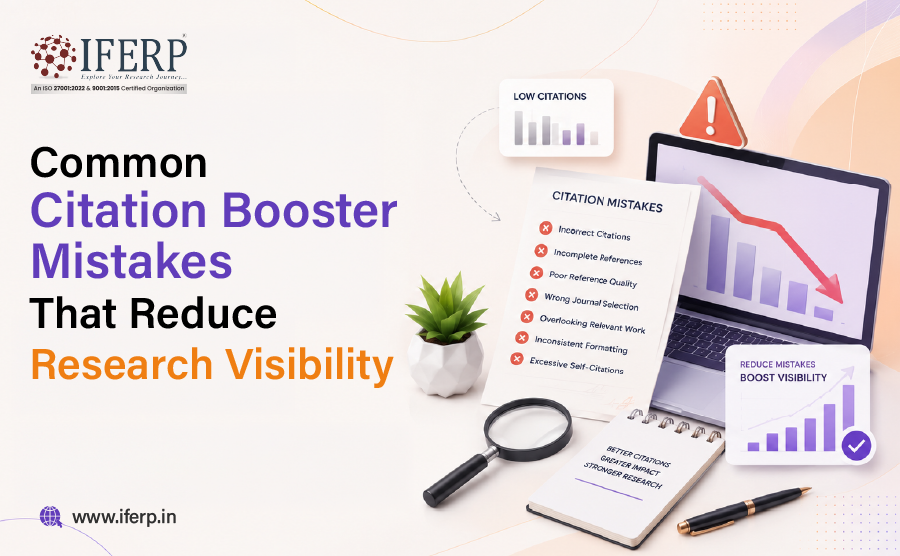
Publishing your research is just the first step in making the research visible to the target audience. Many researchers overlook certain practices that influence the discoverability and potential of their work without realizing that this may mean a lost opportunity.
This article will discuss the most common mistakes related to research citation boosters and how these mistakes influence research citations. You will also learn some ethical ideas on the proper way to improve long-term visibility of research results.
What is a Citation Booster?
A citation booster means techniques, methods, or citation booster services that enhance the visibility of academic research. Citation boosting helps enhance the success of the published research by providing proper visibility for the relevant academic audience. Therefore, the technique of citation boosting relies on natural citation growth rather than artificial citation boosting. It helps ensure the research is discoverable through reliable metadata, trusted publication services, reputable publication outlets, and appropriate academic communities.
Citations add to the credibility of scholarly work, establish the research effect, and help secure networking and funding opportunities. Ethical citation enhancement ensures long-term research impact through discoverability, while unethical approaches like citation manipulation or excessive self-citing call one’s academic honesty into question and should therefore be avoided.
Why Research Visibility is Important
Research visibility is important because it increases the chances of your work being discovered, cited, and recognized, further creating a stronger academic impact and career prospects.
Increased academic reputation: Research that is widely visible is more attractive to researchers, hence raising its credibility and chances of receiving high-quality citations.
More opportunities for collaboration: Increased visibility facilitates collaboration with fellow scientists, enabling joint work, international partnerships, and interdisciplinary cooperation.
Better career development: The high visibility of research influences promotion decisions, tenure, speaking invitations, and overall career advancement.
Greater research efficiency: Research that reaches the right audience will have a greater impact on scientific developments.
Greater chance of getting funding: Funding organizations consider research visibility when assessing grant proposals; thus, more visible studies are more successful.
Top 12 Common Citation Booster Mistakes That Reduce Research Visibility
Avoiding common citation booster mistakes helps researchers improve discoverability, attract relevant research citations, and build long-term academic impact through ethical and sustainable citation strategies.
Mistake 1: Publishing in the Wrong Journal
Publishing research work in a journal that does not conform to the scope of research limits discoverability and lowers citation opportunities. Even high-quality work fails to reach the right audience for the research topic when people are not interested in the subject. Check the journal’s scope, readership, and relevance to the topic before making a submission in order to improve research visibility and impact.
Mistake 2: Choosing Journals with Poor Visibility
Publishing papers in journals with poor indexing and limited readership impedes the dissemination of research. Papers published in poorly indexed journals lack visibility and thus attract fewer citations. Choose reputable Scopus-indexed journals or other well-indexed publications that can make your research accessible to different researchers around the world.
Mistake 3: Ignoring SEO for Research Titles and Abstracts
The titles and abstracts are very useful in helping researchers find your paper on academic search engines. If the title is unclear, the abstract is weak, and keywords are poorly chosen, the visibility of the paper in search engines will be lower, though the research itself might be useful. Therefore, titles should be descriptive, keywords should be used naturally, and abstracts should properly summarize the study.
Mistake 4: Not Promoting Research After Publication
Publishing alone does not guarantee research visibility or impact. Researchers often neglect to disseminate their results through institutional repositories, academic networking platforms, and professional communities. Ethical promotion improves the chances of being cited in papers by raising awareness among relevant scholars without resorting to unethical citation practices.
Mistake 5: Poor Keyword Selection
Finally, keywords allow search engines and academic databases to figure out what your research is about. Use of general, outdated, or inconsistent terms leads to ineffectiveness of your article in terms of finding. So, always choose keywords that accurately reflect your study and align with common search queries, and remain consistent throughout the title, abstract, and manuscript.
Mistake 6: Ignoring Research Profiles
If researchers’ profiles are incomplete, they should experience reduced visibility across different academic platforms. It is best to keep your ORCID, Google Scholar citations profile, and your institutional researcher profile updated so that others can find your scientific work more easily. Well-organized profiles help strengthen your academic identity and expand your collaboration and citation opportunities.
Mistake 7: Weak Internal and External Research Promotion
Many researchers miss promotion opportunities available in their institutions. Publication distribution through university websites, departmental pages, and personal academic profiles helps increase the publication’s audience beyond the journal itself. When used together with reputable academic sites, these resources provide ethical visibility for research and ensure continuous academic engagement.
Mistake 8: Low-Quality Figures and Tables
Poorly constructed figures and tables reduce reader interest and make research findings hard to understand. Small font size, unobvious images, and absent captions may discourage readers from referring to your work. Use neat, informative visuals to complement your manuscript and make it readable.
Mistake 9: Citation Manipulation
Increasing citation rates artificially using self-citation, citation stacking, or unnecessary citation requests harms academic reputation and undermines credibility. These actions could be against publishing ethics, which can damage your reputation. Ethical citation strategies involve producing high-quality research and earning authentic citations through scholarly merit rather than manipulation.
Mistake 10: Using Outdated References
A poor literature review typically includes outdated references and omits seminal studies. However, audiences and reviewers expect research to take into account both present-day findings and classic studies. Updating references continuously before submitting research proves a strong command of current ideas.
Mistake 11: Ignoring Conference Opportunities
Presenting research at academic conferences increases exposure and connects your work with researchers who share similar interests. Participating in upcoming international conferences in 2026 can generate valuable discussions, encourage collaborations, and improve long-term research visibility. Conference presentations often lead to future citations and research partnerships.
Mistake 12: Not Updating Published Research Visibility
After publication, research visibility requires ongoing attention. Authors regularly forget to update their work in author profiles, institutional repositories, and research databases. Keeping publication records current ensures your latest work remains discoverable, supports consistent citation growth, and strengthens your overall academic presence over time.
How to Increase Research Visibility Ethically
The reputation of a research article increases through ethical efforts. This helps the right audience discover, access, and cite your work without relying on artificial citation practices.
Publish in reliable publications: Selecting relevant reputed journals is important to publish your work in.
Use descriptive words: Making your titles, abstracts, and keywords meaningful will certainly help to ensure discoverability.
Creating research profiles: Having neat profiles like ORCID, Google Scholar, and institutional researcher profiles matters too.
Participating in conferences: Bringing discoveries to the public and being part of the network is also a good way to maintain reputation.
Distribution through academic networks: Share your work through credible academic platforms and institutional repositories.
Collaborate with researchers: Build meaningful collaborations that broaden your research reach and impact.
Keep Research Profiles Updated: Regularly add new publications, citations, and achievements to ensure continued visibility.
Best Practices for Citation Boosting
Ethical citation boosting delivers lasting results by improving your research’s discoverability, accessibility, and credibility, helping it reach the right audience and earn genuine academic recognition.
- Choose suitable and indexed journals accordingly.
- Use good titles and keywords in the title.
- Remember your summary when drafting.
- Keep authors’ names consistent through all publications.
- Disseminate published research in trustworthy academic avenues.
- Make sure that you have an updated ORCID and Google Scholar account.
- Attend conferences for more exposure and networking.
- Establish collaborations in academia to exchange knowledge, thus guaranteeing research results.
- Work with reliable citation booster services known for ethical practices.
Ethical Citation Booster vs Unethical Citation Practices
Ethical citation boosting strengthens research visibility through genuine academic value. Unethical practices attempt to inflate research citations artificially and can damage long-term credibility.
| Ethical Citation Booster | Unethical Citation Practices |
| Publishing quality research | Citation manipulation |
| Relevant keyword optimization | Forced citations |
| Academic networking | Citation cartels |
| Conference presentations | Excessive self-citation |
| Responsible research promotion | Duplicate publication |
| Sharing through institutional repositories | Fake metrics |
IMPORTANT NOTE: Sustainable citation growth comes from publishing quality research, improving discoverability, and promoting your work through ethical academic channels. Shortcuts may temporarily increase citations, but genuine research impact is built on credibility, relevance, and long-term scholarly contribution.
Common Myths About Citation Boosting
Citation boosting can often be misunderstood. People who believe in widespread myths can reduce their research visibility by neglecting ethical practices that support genuine citation growth and long-term impact.
Myth: After publication, citation numbers will automatically increase.
Reality: Research needs consistent visibility and proper promotion to reach the right audience.
Myth: Self-citation will always increase the impact of research.
Reality: Excessive self-citation harms academic credibility.
Myth: Only journals with huge impact receive citations.
Reality: Good research, which is easy to find, can receive citations in reputable journals.
Myth: Social media can ensure citations only.
Reality: Academic networks and level of research matter.
Citation Booster Checklist
- Published in a relevant journal
- Title optimized
- Abstract includes important keywords
- Author profiles updated
- ORCID linked
- Google Scholar profile maintained
- Institutional repository submission completed
- Conference presentation completed
- Research shared ethically
- Collaborations established
Conclusion
Avoiding common citation booster mistakes helps researchers improve research visibility, strengthen academic credibility, and achieve sustainable citation growth. Focus on publishing quality research, optimizing discoverability, and promoting your work through ethical academic channels. Citation growth is a long-term process built on consistency and trust. By following responsible research promotion strategies, you can enhance your academic reputation and maximize the lasting impact of your published work.
Frequently Asked Questions
FAQ 1: What are the most common citation booster mistakes researchers make?
Common mistakes include poor journal selection, weak keywords, limited promotion, outdated references, ignoring researcher profiles, and unethical citation practices.
FAQ 2: How do citation booster mistakes affect research visibility?
These mistakes reduce discoverability, limit audience reach, decrease research citations, and negatively impact long-term academic recognition and research influence.
FAQ 3: Can excessive self-citation reduce research credibility?
Yes. Excessive self-citation appears unethical, weakens academic credibility, and may raise concerns among reviewers, publishers, and fellow researchers.
FAQ 4: How can I increase citations ethically?
Publish quality research, optimize keywords, present at conferences, maintain researcher profiles, collaborate, and promote studies through trusted academic channels.
FAQ 5: Why are keywords important for research visibility?
Relevant keywords improve searchability in academic databases, helping researchers discover, access, and cite your work more effectively over time.
FAQ 6: Does publishing in Scopus-indexed journals increase citation potential?
Yes. Scopus-indexed journals generally offer better discoverability, wider readership, and greater opportunities for receiving relevant research paper citations.
FAQ 7: How does presenting at conferences improve citation opportunities?
Conference presentations increase research exposure, encourage academic networking, foster collaborations, and help researchers discover and cite your published work.
FAQ 8: Should I create an ORCID and Google Scholar profile?
Absolutely. Updated ORCID and Google Scholar profiles improve researcher visibility, publication discoverability, and professional credibility across academic platforms.
FAQ 9: How long does it take to increase research citations?
Citation growth varies by discipline but typically develops gradually through quality research, ethical promotion, and consistent academic visibility over time.
FAQ 10: What are the best long-term strategies to improve research visibility?
Focus on quality research, reputable journals, keyword optimization, academic networking, conferences, updated profiles, and responsible research promotion for lasting impact.
Editing & Proofreading Services
Build Your Academic CV with IFERP AI Resume Builder
Scopus Indexed Conferences 2026
-
9th International Conference on Multidisciplinary and Current Educational Research (ICMCER)

-
9th International Conference on Recent Trends in Multi-Disciplinary Research (ICRTMDR)
-
50th World Conference on Applied Science, Engineering & Technology (WCASET)
-
9th International Conference on Dentistry and Oral Health (ICDOH-2026)
News
- Siddth Jain and Rudra’s IFERP is Empowering a Global Research Community
- From Idea to Funding: IFERP's Guide to Successful Grant Applications
- Protecting Researchers: IFERP’s Guide To Identifying And Avoiding Hijacked Journals
- The Power of Networking: How IFERP memberships open doors to global opportunities for universities
- IFERP bridges academia and industry for global sustainability
- Ballot Education Project takes center stage: Bridging theory and practice at International Conference
- IFERP Spearheads Global Sustainable Development Through Research & Innovation